State and Chapter Web Sites of the Daughters of the American Revolution
****
For a number of years this website provided information about the State and Chapter web sites of the Daughters of the American Revolution located not only in the United States, but also in Canada. At some point this site's domain expired. There were several iterations of the site created by various buyers of the domain that had nothing to do with the original intent of the site. My great aunt would have rolled over in her grave if she has seen what happened to this site before I bought it. My great Aunt Edith was a proud member of the Captain Joshua Gray-Jonathan Hatch Chapter Daughters of the American Revolution. She lived her entire life, 90+ years on Cape Cod. A true Yankee to say the least. A no nonsense, thrifty woman who was always looking for the best price whether it was for a pair of shoes or a package of toilet paper. I think she would have approved of my most recent job working for an online e commerce site that sells the best wholesale paper towels, other paper products such as toilet paper, tissues, and napkins as well as janitorial supplies running the gamut from cleaning supplies to mops, brooms, trash bags, etc. Dear Aunt Ethal would not only have loved the variety of brands and products, but also the fact that although the site's main business is selling wholesale to large companies and organizations, they also sell to retail consumers at wholesale prices. And I know she would applaud the fact that the site also offers eco friendly, "green" if you will, products. Ah, sorry for my digression, now let me get to the back story of my purchasing nerowolf.org.
When I recently discovered that the domain was available, I bought it with the intent of restoring some of its original content found in its archived pages. The Daughters of the American Revolution should have a strong presence on the WWW since their goals are as relevant in today's society as they were when the organization was founded in 1890. Please view this site's presented information in its historical context.
The NATIONAL SOCIETY DAUGHTERS OF THE AMERICAN REVOLUTION is a non-profit, non-political, volunteer organization founded in 1890 in Washington, D.C. It was incorporated by an Act of Congress in 1896. Their present website is: www.dar.org. It contains information on all the states' chapters and the important works its members are doing with historical preservation, promotion of education, and encouragement of patriotic endeavors.
Now step back in time to read about some of the fascinating Daughters of the American Revolution chapters.;


****
Welcome to the Major John Bowie Chapter!
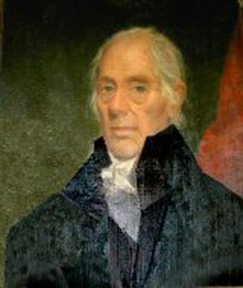 Major John Bowie Chapter was organized on October 24, 1987, in Abbeville with Mrs. Barbara Lewis Choiniere as Organizing Regent. The chapter was named for John Bowie who was born May 10, 1740, in the Parish of New Kirkpatrick, Dunbartonshire, Scotland. He immigrated to America in 1762 and landed in Virginia June 8th of that same year. His first business was an engagement in traffic with the Cherokee Indians in that portion of their country which is called Tennessee. He married Rosa Reid, daughter of Colonel George Reid, and they settled on Long Cane Creek in Abbeville, South Carolina. In 1777, he was commissioned Captain in the Fifth South Carolina Regiment. During the war, he was wounded at Savannah, October 9, 1779. He was a Major in 1781 and served until the close of the war. After the Revolutionary War, John Bowie served for many years as clerk for the Abbeville County Court.
Major John Bowie and his wife, Rosa Reid Bowie, are buried at Long Cane Cemetery in Abbeville, SC. The Major John Bowie DAR Chapter maintains the cemetery plot.
Abbeville County is rich in history dating back to the 1700s. Abbeville's historic district, an area of about 300 buildings, extends north and south from the square and is considered to offer one of the best collections of late Victorian architecture in South Carolina.
Qualifications to join the Daughters of the American Revolution can be obtained from the NSDAR Membership site. Prospective members are welcome and we would like to receive Email from you.
Pictured at the top of the page is the DAR Insignia. The golden wheel represents a spinning wheel, the platinum or white gold distaff carry the colors of the society (blue and white) and the stars represent the original thirteen colonies.
"Our emblem is a golden wheel, banded with deepest blue. Each shining spoke tipped with a star, the distaff shining through; The only jewel in the world that money cannot buy without such proof of ancestry as no one can deny."
The hub: Each loyal daughter's heart.
Each spoke: A thought of those from whom we part.
The tie: A noble life well rounded out.
Each star: A deed of kindness as we; go about.
Each flaxen thread: A cord of love to bind us closer day by day.
The distaff: The rod of love to guide us all the way.
2005-2008 Chapter Officers
|
Regent |
Susan Brantly Murphy |
|
Vice Regent |
Barbara Fleming Hawthorne |
|
Chaplain |
Joan Brooks Sawyer |
|
Recording Secretary |
Mary Frances Nicholson |
|
Corresponding Secretary |
Betty Houston Goin |
|
Treasurer |
Lucy Clamp Willis |
|
Registrar |
Barbara Lewis Choiniere |
|
Librarian |
Frances Pursley Lewis |
|
Historian |
Barbara Lewis Choiniere |
|
Parliamentarian (appointed) |
Susie King New |
****

Welcome to the General Marquis Calmes Chapter
The Calmes family came in 1706 from Languedoc, a province of Southern France, and tradition has it that they fled because of the oppression of the Huguenots. They settled first in Stafford County, Virginia, and later moved to Frederick County, Virginia.
General Calmes was born in the Shenandoah County of Virginia, February 26, 1755. He was sent abroad to be educated as was the custom of wealthy families of that period, but when the Revolutionary War broke out in October, 1775, he returned home to serve his country.
In October, 1775, Marquis Calmes was commissioned a Second Lieutenant in the Company of Captain Alexander Spotswood. Later, he raised and equipped a company of soldiers at his own expense, and with them, served with distinction. He was Captain of his company and in 1808 was commissioned Major-General. He was promoted to General in 1812.
Marquis Calmes had visited the Kentucky area in 1775 and had purchased four hundred acres of land in what would later become Woodford County. By preemption warrant signed by Patrick Henry, Calmes received one thousand acres of land near the town which he would name for Versailles, France. At the close of the war, he returned to this area and built a fine home three and one-half miles from Versailles. He named his home “Caneland”. At the age of twenty-seven, Calmes married Priscilla Heale (Hale). Nine children were born to them.
In 1795 Marquis Calmes made his only venture into politics, entering the State Legislature as a representative of Woodford County. He died February 27, 1834, at Caneland, where his remains repose with those of his wife in a stone mausoleum. This mausoleum was restored in 1990.
At the organizational meeting of the General Marquis Calmes Chapter in November, 1923, Mrs. Robert Keene Arnold was elected Regent; Mrs. Theodore Harris, Vice Regent; Mrs. George Douglas, Registrar; Miss Katherine Sullivan, Secretary; Mrs. Wade H. George, Historian; Mrs. B.F. Chenault, Treasurer; and Mrs Horace Gay, Chaplain. State Regent Mrs. William Rodes, was present.
Mrs. Harris read a sketch of the life and service of General Marquis Calmes, the founder of Versailles, written by her father, the late John Andrew Steele and, at her suggestion, it was decided to name the chapter after the General.
The General Marquis Calmes Chapter is honored to have had Organizing Regent Mrs. Robert Arnold to represent the chapter as the State Regent and as a National Officer twice.
****
At the chapter organizational meeting in November 1923, Mrs. Robert Keene Arnold was elected Regent and Mrs. Theodore Harris was elected Vice Regent. Mrs. Harris read a sketch of the life and service of General Marquis Calmes, the founder of Versailles, written by her father, the late John Andrew Steele and, at her suggestion, it was decided to name the chapter after the General.
General Marquis Calmes was born in the Shenandoah County of Virginia on February 26, 1755. He was sent abroad to be educated as was the custom of wealthy families of that period, but when the Revolutionary War broke out in October, 1775, he returned home to serve his country. In October, 1775, Marquis Calmes was commissioned a Second Lieutenant in the Company of Captain Alexander Spotswood. Later, he raised and equipped a company of soldiers at his own expense, and with them, served with distinction. He was Captain of his company and in 1812 was promoted to General.
Marquis Calmes had visited the Kentucky area in 1775 and purchased four hundred acres of land in what would later become Woodford County. By preemption warrant signed by Patrick Henry, Calmes received one thousand acres of land near the town which he would name Versailles. At the close of the war, he returned to this area and built a fine home three and one-half miles from Versailles. At the age of twenty-seven, Calmes married Priscilla Heale (Hale) and they had nine children. He died February 27, 1834, and his remains repose with those of his wife in a stone mausoleum at their home.
The organizing officers were Regent Mrs. Robert Keene Arnold, Vice Regent Mrs. Theodore Harris, Registrar Mrs. George Douglas, Secretary Miss Katherine Sullivan, Historian Mrs. Wade H. George, Treasurer Mrs. B.F. Chenault, and Chaplain Mrs Horace Gay. Kentucky State Regent Mrs. William Rodes was present
The General Marquis Calmes Chapter is honored to have had our Organizing Regent Mrs. Robert Arnold to represent the chapter as the State Regent and as a National Officer twice.
Chapter Officers
|
Regent |
Margaret Shropshire |
|
First Vice Regent |
Abbie Sutton Wood |
|
Chaplain |
Bobbie Jean Burkich |
|
Recording Secretary |
Sue Martin |
|
Corresponding Secretary |
Nadine Close |
|
Treasurer |
Katey Meares |
|
Registrar |
Nadine Close |
|
Librarian |
Margaret Shropshire |
|
Historian |
Kathy Hall |
|
Honorary Regent |
Margaret Karsner |
We would love to have you join our chapter!
Chapter Ancestors
|
|
|
|
|
|
|
|
|
|
|
|
|
|
|
|
|
|
|
|
|
****